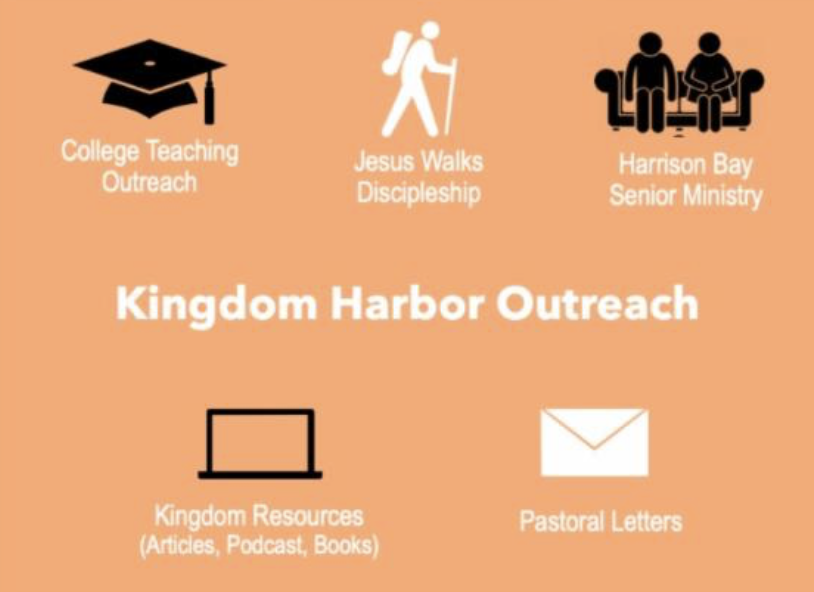
“Shackled” for the New Year

2010 January 2

I love fresh starts. Clean slates. New beginnings. Therefore I love New Year’s day. It’s a time to take inventory of our lives’ rhythms and priorities, make necessary adjustments, or those pesky “resolutions” and all the rest.

For the Christian it is a time for inward reflection on our spiritual health and faith habits.  How’s my walk with God? How’s my prayer life? How’s my devotional life?  How’s my public witness? How am I being faithful to the Great Commission and Great Commandments?  New Years often drives us to ask these questions.

Well, each year amidst my own personal reflections on the New Year, I also devote one message to the youth group on the topic.  In the past one of my “default” messages for such an occasion focuses on beginning a new chapter in your life’s story. You know the drill: Our lives are storybooks being written one day at a time by our personal choices under God’s sovereign reign. Our books are filled with happy chapters, sad chapters, painful chapters, healing chapters and boring, monotonous chapters. Each new year we’re given blank pages symbolizing the wide open opportunities and a new chance to make this chapter the best yet.

I love declaring the good news to teens that God is in the business of giving us clean, fresh, blank pages to begin afresh with renewed commitment and resolve to live life for his glory.The task of the Christian is to align their personal story plot with the overarching Plot of God’s redemptive Kingdom Story.

Yet, this New Year my heart and mind have been arrested by a more blunt and challenging New Year’s message. As I was writing our annual Christmas letter I landed on the no-nonsense, straight-shooting warning of James 4:13-17. I can’t think of a better scripture to meditate on as we “turn another page” and begin living out a new chapter in our story. Let these words mess with you and have their way:

Look here, you who say, “Today or tomorrow we are going to a certain town and will stay there a year. We will do business there and make a profit.” How do you know what your life will be like tomorrow? Your life is like the morning fog—it’s here a little while, then it’s gone. What you ought to say is, “If the Lord wants us to, we will live and do this or that.” Otherwise you are boasting about your own plans, and all such boasting is evil. Remember, it is sin to know what you ought to do and then not do it. (James 4:13-17)

And people say the Bible is old, outdated and hard to understand!   read more…

QUOTABLES: Oswald Chambers on Self-Pity

2010 January 2
by Jeremy Berg

“No sin is worse than the sin of self-pity because it obliterates God and puts self-interest upon the throne.”

-Oswald Chambers, My Utmost For His Highest

Celebrate New Year with Bono’s ‘82 Mullet

2010 January 1
by Jeremy Berg

My favorite New Year’s Day song featuring Edge with hair, Bono with an enormous mullet and 80s hipsters dancing in the background.  From United Kingdom TV show called The Tube. Happy New Year!

What’s your favorite New Year’s Day song?

Daily Illumination 2009: Year In Review

2009 December 31

What a ride it’s been — for me at least. One year ago I started the new Daily Illumination blog. Why? I have been reading obsessively for the past decade, intaking large quantities of biblical facts and knowledge, listening to lectures and podcasts, completing two degrees in Biblical and Theological Studies. Last January I felt it was time to start “outputting” and sharing my love of these topics with others. Thus, Daily Illumination was born.

For the past 365 days I have logged hundreds of hours attempting to bring “daily reports from the busy intersection of faith and everyday life.” It’s been a lot of work and a lot of fun.

Here is a look back at the past year at Daily Illumination:

READERSHIP

I have put zero effort into promoting and advertising this blog. I did not start blogging to gain readers. I wanted to sharpen my mind and polish my writing skills; if anyone else happened to tune in and benefit from it — bonus.  But we all love to share the things their most passionate about — in this case Christianity, the Bible, culture, Jesus and theology — with others who share this interest.  So, it has been great to have some loyal readers who keep coming back for more of my daily writings. Just so you know, I have no idea who you are.  Please let me know if you’re a regular reader of DI by personally dropping me a comment, email or Facebook message.  It would make me day.

How about the stats?  The mustard seed principle applies here as well. I had only 180 visitors the first 2 months combined.  Now that many stop by almost daily. Traffic picked up over the summer and this fall has exploded exponentially. More than 4,000 visitors stopped by DI in October and the upward trend continues. Total visitors in 2009 was over 21,000.

HIGHLIGHTS

If you’re new to DI or only stopped by occasionally, here are some of the highlights from the past year. read more…

Shimmer & Shine ‘09

2009 December 30

Once and awhile I like to post a video giving my readers a glimpse into the wonderful high school ministry I get to lead.  Here’s a peak at our annual Christmas dance we call “Shimmer & Shine.”  This year we went back to the 1940s to the Hollywood Canteen for some swing dancing.  Enjoy!

For the Record: “I Believe…”

2009 December 30
by Jeremy Berg

So many theological, social and political debates rage on all around us and it’s so easy to get sucked into unnecessary arguments. The Church, tragically, is notorious for drawing unnecessary lines in the sand, splitting hairs and dividing over nonessential doctrines, political viewpoints, cultural debates and so on.  Once in a while it’s refreshing to remember the core beliefs upon which the Christian faith rests and for which the martyrs were willing to shed their blood.

Here is what I believe to be the essentials…

  • I believe there is one God, eternally existing in three persons: Father, Son, and Holy Spirit.
  • I believe the Bible to be the inspired, the only infallible, authoritative Word of God.
  • I believe in the deity of our Lord Jesus Christ, in his virgin birth, in his sinless life, in his miracles, in his vicarious atonement through his shed blood, in his bodily resurrection, in his ascension to the right hand of the Father, and in his personal and visible return in power and glory.
  • I believe that man was created in the image of God, that he was tempted by Satan and fell, and that, because of the exceeding sinfulness of human nature, regeneration by the Holy Spirit is absolutely necessary for salvation.
  • I believe in the present ministry of the Holy Spirit by whose indwelling the Christian is enabled to live a godly life, and by whom the church is empowered to carry out Christ’s great commission.
  • I believe in the bodily resurrection of both the saved and the lost; those who are saved unto the resurrection of life and those who are lost unto the resurrection of damnation.

What’s missing?

You’ll notice no mention of my understanding of God’s foreknowledge, my position on the evolution debate, the eternal security debate, my personal view of Hell, my political views, the age of the earth, my view of the End Times and a thousand other secondary, non-essentials.  Let’s keep the main things the main things and strive for unity around the things that truly matter.  Grace and peace.

How N.T. Wright Stole Christmas (Peter Leithart)

2009 December 29

Have you listened carefully to and reflected on the meaning of the words of the Christmas carols we’ve been singing this past week?  Do they accurately capture the true meaning of Advent?

Well, some are better than others.  A recent article by Peter Leithart at Credenda Agenda probes this topic interacting with the scholarship of Bishop N.T. Wright that exposes the many ways our favorite Christmas hymns get the Christmas story wrong.  The article is humorously entitled, “How N. T. Wright Stole Christmas.”

Here’s a taste of the article:

[Wright] made me see the fairly radical difference in tone and content between Advent and Christmas hymns. Advent hymns, as you’d expect, are full of longing, and the language of the prophets. Advent hymns are about Israel’s desperations and hope, and specifically hope that the Christ would come in order to keep Yahweh’s promise to restore His people, and through them to restore the nations. . . .

. . . Advent hymns are about Israel. They are deeply and thoroughly political. Advent hymns look forward not to heaven but the redemption of Israel and of the nations, the coming of God’s kingdom on earth.

When we turn to Christmas hymns, these themes almost completely drop out. How many Christmas hymns mention Israel? Many refer to Bethlehem as the birthplace of Jesus, but Jerusalem? . . . read more…

MOVIE REVIEW: The Blind Side (2009)

2009 December 28

The most inspiring, heart-warming cinematic experience of the year for me has been without question The Blind Side starring Sandra Bullock. While this movie based on a true story is sure to win over everybody’s heart, there is a special significance for Christians viewers.  Coming out just in time for the Christmas season I found this film radiating with echoes of the gospel and the heart of true Christian faith and love.  Let me share a few of these observations below.  But first a brief synopsis:

“The Blind Side” depicts the story of Michael Oher, a homeless African-American youngster from a broken home, taken in by the Touhys, a well-to-do white family who help him fulfill his potential. At the same time, Oher’s presence in the Touhys’ lives leads them to some insightful self-discoveries of their own. Living in his new environment, the teen faces a completely different set of challenges to overcome. As a football player and student, Oher works hard and, with the help of his coaches and adopted family, becomes an All-American offensive left tackle.”

Sandra Bullock has been nominated for a Golden Globe for her portrayal of southern belle Leigh Anne Tuohy whose Christian convictions lead her to take in and “adopt” the all-but-forgotten Michael Oher and raise him as her own. The film certainly didn’t trumpet the gospel and is by no means “preachy” at all.  Yet, the director is to be commended for making it relatively plain what was the key motivating influence in the Tuohy household — Christ. The Washington Post shares some of Sandra Bullock’s personal thoughts on playing the role of this evangelical Christian woman HERE.

Here are a couple of my observations related to Leigh Anne’s “living out” her Christian faith and how the gospel shines through this story. read more…

VIDEO: “Love Is An Orientation” (Andrew Marin)

2009 December 27

YouthWorker Journal editor Steve Rabey talks with Andrew Marin about ways youth workers can reach out to gay and lesbian youth, and how in the past churches have failed to minister to those struggling with same-sex attraction in a Christ-like manner. Andrew is the director of The Marin Foundation, and the author of “Love Is an Orientation: Elevating the Conversation with the Gay Community” (IVP). Learn more at: TheMarinFoundation.org.

I highly recommend Marin’s book and approach to building bridges with the GLBT community for Christians — especially youth workers.  For a taste of Marin’s perspective check out this video:

When is Jesus’ Birthday?

2009 December 26

From Michael Patton at Parchment and Pen:

“The traditional date for the birth of Christ from as early as Hippolytus (ca. A.D. 165-235) has been December 25th. In the Eastern Church January 6th was the date for not only Christ’s birth, but also the arrival of the Magi on Christ’s second birthday, His baptism in His twenty-ninth year, and the sign at Cana in His thirtieth year. However Chrysostom (A.D. 345-407) in 386 stated that December 25th is the correct date and hence it became the official date for Christ’s birth in the Eastern Church (January 6th was still considered the day for the manifestations of the coming of the Magi, the baptism, and the sign at Cana.

Although the exact date may not be pinpointed it seems that there is a relatively old tradition of a midwinter birth, therefore a date in December or January is not in itself unlikely.

The one objection raised for the winter date is the fact of the shepherds attending their flock in the night (Luke 2:8). Usually, it is noted, the sheep were taken into enclosures from November until March and were not in the fields at night. However, this is not conclusive evidence against December being the time of Christ’s birth for the following reasons. First, it could have been a mild winter and hence the shepherds would have been outside with their sheep. Second, it is not at all certain that sheep were brought under cover during the winter months. Third, it is true that during the winter months the sheep were brought in the from the wilderness. The Lukan narrative states that the shepherds were around Bethlehem (rather than the wilderness), thus indicating that the nativity was in the winter months. Finally, the Mishnah (Shekalim 7:4) implies that the sheep around Bethlehem were outside all year, and those that were worthy for the Passover offerings were in the fields thirty days before the feast, which would be as early as February, one of the coldest and rainiest months of the year. Therefore, a December date for the nativity is acceptable.

In conclusion, the exact date of the birth of Christ is difficult to know with finality. However, a midwinter date is most likely. It is clear that Christ was born before Herod the Great’s death and after the census. In looking at the birth narratives of Matthew and Luke one would need to conclude that Christ was born of Mary within a year or two of Herod’s death. In looking to some of the other chronological notations in the Gospels, the evidence led to the conclusion that Christ was born in the winter of 5/4 B.C. Although the exact date of Christ’s birth cannot be known, either December of 5 B.C., or January of 4 B.C. is most reasonable.”

Harold W. Hoehner, Chronological Aspects of the Life of Christ (Grand Rapids, Michigan: Zondervan, 1981) pp. 25-27

Merry Parachoresis! A Christmas Reflection

2009 December 25

The Christmas story is all too familiar for most Christians today. We’ve seen two dozen pageants, have basically memorized Matthew and Luke’s accounts of wise men, shepherds, overbooked inns and barnyard manger scenes. The problem with familiarity, as Dallas Willard puts it, is that “Familiarity breeds unfamiliarity — unsuspected unfamiliarity, and then contempt” (The Divine Conspiracy, 11).

Thus, pastors often struggle preparing their annual Christmas message.  But as my recent post argued (See “And There Were Shepherds”), the Christmas story is filled with shock and mind-boggling surprises.  One has to work very hard to make this story ordinary and boring.  The story of Christmas is the most extraordinary story ever told.

This Christmas I shared a brief Christmas message at our high school Christmas dance — yes, my Baptist friends, our youth group had a dance to celebrate the birth of our savior.  This year my message centered around the image of “The Dance of the Trinity” and Christ’s relentless pursuit of more and more dancing partners to come back into a life of living in the harmonious rhythms of the Kingdom Dance.

My message outline went something like this: read more…

Advent Devotional: Christmas Eve/Day (by Mark Roberts)

2009 December 24
by Jeremy Berg

We have been observing the season of Advent with the help of Mark D. Robert’s Devotional centered around the ceremony of the Advent Wreath.  Finally our wait is over as we welcome our Savior to the world with the lighting of the 5th candle.  Merry Christmas!  JB

The Lighting of the Christ Candle: The Waiting is Over!

Christmas Eve or Christmas Day

[Re-light the three purple candles and the pink candle]

We Celebrate the Birth of Christ

In the season of Advent we have used the Advent wreath and its candles to help us get ready for this great celebration of the birth of Christ.

When we lit the first purple candle, we asked God to come and be our Good Shepherd.  God our Shepherd has come in Jesus Christ!

When we lit the second purple candle, we asked God to come and forgive our sins.  God has come in Jesus Christ to take our sins and die upon the cross so that we might be forgiven!

When we lit the third, pink candle, we felt joyful even in our longing for Christ to come.  Christ, who has been born in a manger, will come again in glory to wipe away every tear from our eyes!

When we lit the fourth candle, we remembered that Christ would come as a son — the son of Mary, the Son of David, and the Son of God!  This Son has been born!  He is Immanuel — God with us!

Today we celebrate the birth of Jesus the Christ, Jesus the Good Shepherd, Jesus who forgives our sins, Jesus who will come again, Jesus the son of Mary, the Son of David, and the very Son of God!

Prayer for God’s Help

Dear God, as we light the center candle today, may we celebrate with full joy the birth of your Son, Jesus the Christ.  Amen! read more…

The Star of Bethlehem: One Theory

2009 December 23

What do we make of the story of the wise men following a magical star from the East to the newborn king in Bethlehem?  Sound a bit far-fetched and fairytale-ish?  I used to think so as well.

Many deny the possibility of a supernatural explanation to begin with. This is unnecessary.  If God can bring the universe into being with divine decree and raise the dead at will, then I see no reason why he could not have also sent a bright star that first Christmas.

However, must we rule out all naturalistic explanations?  A little historical and cultural background of this story also reveals some very plausible scientific theories as to what this astronomical/astrological phenomenon might have been.  Perhaps under God’s wise sovereignty and foresight, that “star” that led the magi to Bethlehem was a combination of natural astral activity in concert with God’s supernatural sending of his son “when the fullness of time had come” (Gal 4:4).  Let’s take a look.

First, these were not “three kings” as the song goes.  They were “magi” from the East — most likely superstitious astrologists perhaps from the royal court of the Babylonian empire. It does not specify how many. The ancients assigned great significance to the art of reading and interpreting the movements of the skies.  They kept careful records of the notable celestial activity, and with computer technology today we can calculate exactly where each star and planets were in the sky accurately all the way back 2,000 years and beyond.

Second, the scientific records indicate some pretty interesting astral activity occurring around the time of Jesus’ birth. read more…

A Red Dragon in the Nativity Scene

2009 December 22

Gather around little boys and girls. It’s time for our annual reading of the Christmas story — with a twist.

I’ve seen many a nativity scenes and Christmas pageants over the years with wooden stables, sheep and goats, ox and ass, and Mary and Joseph with baby Jesus surrounded by shepherds and wise men. Interestingly, the Bible hasn’t a word about animals being present at Christ’s birth; but it does mention something far more dangerous than a rowdy sheep. However, I’ve yet to see a pageant or nativity set with a giant, ill-tempered, seven-headed red dragon lurking in the distance waiting to attack.

The Book of Revelation includes its own lesser known apocalyptic styled version of the Christmas story and this one is probably not appropriate for small children. John of Patmos begins his story — or series of wild visions — in chapter 12. Grab a cup of egg nog, put the kids to bed and pull up a chair as we go through it together.  Open your Bible to Revelation 12:1.

1A great and wondrous sign appeared in heaven: a woman clothed with the sun, with the moon under her feet and a crown of twelve stars on her head. 2She was pregnant and cried out in pain as she was about to give birth. read more…

VIDEO: The Star of Bethlehem

2009 December 22
by Jeremy Berg

After Jesus was born in Bethlehem in Judea, during the time of King Herod, Magi from the east came to Jerusalem and asked, “Where is the one who has been born king of the Jews? We saw his star in the east and have come to worship him.” When King Herod heard this he was disturbed, and all Jerusalem with him. When he had called together all the people’s chief priests and teachers of the law, he asked them where the Christ was to be born.

“In Bethlehem in Judea,” they replied, “for this is what the prophet has written: ”‘But you, Bethlehem, in the land of Judah, are by no means least among the rulers of Judah; for out of you will come a ruler who will be the shepherd of my people Israel.’”Then Herod called the Magi secretly and found out from them the exact time the star had appeared. He sent them to Bethlehem and said, “Go and make a careful search for the child. As soon as you find him, report to me, so that I too may go and worship him.”

After they had heard the king, they went on their way, and the star they had seen in the east went ahead of them until it stopped over the place where the child was. When they saw the star, they were overjoyed. On coming to the house, they saw the child with his mother Mary, and they bowed down and worshiped him. Then they opened their treasures and presented him with gifts of gold and of incense and of myrrh. And having been warned in a dream not to go back to Herod, they returned to their country by another route. (Matthew 2:1-12)

VIDEO: Spontaneous Worship on the Street

2009 December 21
by Jeremy Berg

I found this video at The Resurgence. Apparently some Christian guys were shooting a music video for a Sunday service and a homeless man came into the frame and started singing to Jesus out of the blue—wow.  A beautiful moment caught on video to be shared by all.

This video is from @loswhit and the guys at Buckhead in Atlanta.

Meaning of the 12 Days of Christmas

2009 December 21
by Jeremy Berg

Ever wonder what this Christmas carol is about?  From 1558 until 1829 CE, Roman Catholics in England were not allowed to practice their faith openly. Someone during that era wrote this carol as catechism song for young Catholics. It has two levels of meaning; the surface meaning, plus a hidden meaning known only to members of their church.

Each element in the carol has a code word for a religious reality, which the children could remember.

a.. The partridge in a pear tree was Jesus Christ.

b.. Two turtle doves were the Old and New Testaments.

c.. Three French hens stood for faith, hope and love.

d.. The four calling birds were the four gospels of Matthew, Mark, Luke, and John.

e.. The five golden rings recalled the Torah or Law, the first five books of the Old Testament.

f.. The six geese a-laying stood for the six days of creation.

g.. Seven swans a-swimming represented the sevenfold gifts of the Holy Spirit: Prophesy, Serving, Teaching, Exhortation, Contribution, Leadership, and Mercy.

h.. The eight maids a milking were the eight beatitudes.

i.. Nine ladies dancing were the nine fruits of the Holy Ghost: Love, Joy, Peace, Patience, Kindness, Goodness, Faithfulness, Gentleness, Self-control.

j.. The ten lords a-leaping were the Ten Commandments.

k.. Eleven pipers piping stood for the eleven faithful disciples.

l.. Twelve drummers drumming symbolized the twelve points of belief in the Apostles’ Creed.

So there is your history lesson for today. I found this interesting and now I know how this “very strange” song became a xmas carol.

QUOTABLES: Teens, Dads & Gaming

2009 December 20
by Jeremy Berg

“Boys get an alarmingly low average of one half-hour of direct face time with their dads per week, but over 40 hours of screen time (Internet, TV, and gaming total).”

- From Fuller Youth Institute article entitled “Guys and Gaming by Brad Griffin

Tiger Woods: Falling Into Grace?

2009 December 20
by Jeremy Berg

It’s easy to join the chorus of critics in the media and laugh at all the late night talk show jokes about Tiger Woods. We can easily sneer and mutter to ourselves, “Just another celebrity with personal issues.”  I was disturbed to realize how calloused my own attitude has been toward Tiger Woods and his infidelity.

Slowly I was reminded that behind all the tabloid photos and TMZ gossip stands a real, broken, sinful human being just like me. Furthermore, our hearts should really go out to Mrs. Woods and the children.  These are fragile human beings in need of love and forgiveness, not the public humiliation and fanfare befitting of a circus clown.

I have gradually began to take a “Kingdom perspective” on the whole situation, and am joining other Christians who instead of making jokes about the matter are praying that now that Tiger’s sin is being brought out of the darkness, he may even be vulnerable enough to face the true Light of the world who is able to forgive, heal and restore Tiger’s life — if not is career.

Greg Taylor has some good reflections on the Tiger Woods story worth pondering below. See also Ben Witherington’s thoughts on the matter. Both well worth your time.

Here’s Taylor’s brief article: read more…

Advent Devotional: 4th Sunday (by Mark Roberts)

2009 December 20
by Jeremy Berg

We are following the Advent Devotional written by Mark D. Roberts on our journey to the stable.  This fourth Sunday we light another candle on the Advent Wreath as we expectantly wait for the coming of the Son!  Grace and peace, JB

The Lighting of the Fourth Candle: Waiting for the Son

The Fourth Sunday of Advent (or thereabouts)

[Re-light two purple candles and the pink candle.]

We Remember the Meaning of Advent

Advent is a word that means “coming” or “visit”.  In the Christian season of Advent we prepare for the “advent” of Christ at Christmas.  Our preparation includes many things:

• We remember Israel’s hope for the coming of God’s Messiah to save, to forgive, and to restore them.

• We remember our hope for the second coming of Jesus.

• We remember our need for a Savior to save us from our sins.

• We prepare to welcome Christ at Christmas into our world . . . and into our hearts.

By lighting one candle each week of Advent, we help ourselves to get ready for the birth of Jesus.  So far we have lit three candles.  The first reminded us to wait for God our Shepherd.  With the second we asked the Lord to come and forgive our sins.  The third, pink, candle signified our joy as we wait.

Today we focus on the coming of the Son — the son of Mary, the Son of God! read more…

My Top 3: Christmas Movies

2009 December 19
by Jeremy Berg

What are your favorite Christmas movies?  This is hard because I have two different categories for different moods.  First, there are my favorite “meaningful” movies that are usually nostalgic and classic. Second, there are those fun, family favorites that you have to see each year.  Here are my top 3 with some honorable mention runner-ups.

#3 – National Lampoon’s Christmas Vacation:

#2 – White Christmas:

#1 – Elf:


Honorable Mention:

- The Grinch

- It’s A Wonderful Life

- Polar Express

- Home Alone

- The Nativity Story

- Charlie Brown’s Christmas

- Rudolph the Red-Nosed Reindeer

Rethinking Heaven 2: What? When? Where?

2009 December 19
by Jeremy Berg

It is so easy to place God in a box. But again and again we find that God cannot be confined to our little categories. One large way we have managed to push God’s penetrating presence out of our world is by the way we think of and imagine Heaven. I think Heaven can be thought of in at least three different ways: a presence, a time, and a place.

A. First, Heaven is wherever the PRESENCE of God dwells and where His will is perfectly accomplished. That is why we pray, “Thy Kingdom come, Thy will be done here on earth as it already is in Heaven.” Ask any Third Grader “where God lives”, and they will probably say, “In Heaven.” True enough; but this raises the bigger question of “And where is Heaven?” Here our neat little categories break down. Is Heaven here on earth? No. Well, is Heaven somewhere else? I think so. But that means that God lives somewhere other than here. And that goes squarely against what the Bible says about where God resides. The Bible says: read more…

Welcome to Guyland – What’s up with Guys?

2009 December 18

One of my favorite resources for finding timely research on youth culture and understanding teenagers is the Fuller Youth Institute. A recent article explores the “secret underworld” of what Michael Kimmel calls “Guyland.”  I highly recommend reading the FULL ARTICLE HERE.

So, what’s going on in the hearts and minds of today’s teenage boys?  What questions and doubts do they have?  What pressures do they face and what do they fear?  The article begins,

Recent research warns of the chronic underachieving, emotionally drifting, and irresponsible “Guyland” of male adolescence.  But most of us in youth ministry don’t need research to tell us that there are new challenges inherent in working with boys.

Youth pastor and blogger Jeremy Zach recently voiced an ache many of us feel when it comes to the guys under our care: “Talking to a high school male about spiritual stuff is like basically talking to a wall… And trying to motivate a high school guy to pursue righteousness is a tough, tough task.”

Clearly something isn’t connecting for guys in many of our ministries.  How can we as youth workers better equip ourselves and parents to face the current realities of boys and help them engage God and others?  Given that we’re also each raising a son, this is a question we wrestle with every day.

Excuses and Fears

Much of our culture’s collective anxiety about adolescent guys is caught up in various excuses and fears.  Excuses like “boys will be boys” or “it’s a guy thing” have become cultural blankets to cover all sorts of irresponsible and destructive behaviors from young boyhood through adulthood.

Meanwhile we’re overwhelmed by the fears that arise from the behaviors that prompt these excuses in the first place: boys are emotionally closed off, spend too much time playing video games and hanging out online, are too sex-obsessed, lack motivation, and often drift into adulthood with little direction.

More than a few of these fears are valid, but we struggle to find reliable lenses through which to interpret what’s going on with guys.  We should say up front that not every boy is the same (thank goodness!) and not every boy lives by the excuses and fears we describe below.  But these research trends are worth taking time to understand and respond to, for the sake of the guys—and the girls—in our ministries.

The article goes on to describe the closed off world of teenage boys, or “Guyland” as

both a stage of life, a liminal undefined time span between adolescence and adulthood that can often stretch for a decade or more, and a place, or rather, a bunch of places where guys gather to be guys with each other, unhassled by the demands of parents, girlfriends, jobs, kids, and the other nuisances of adult life.

Now, there are certain unspoken rules or “Guy Codes” that govern behavior in Guyland. The first rule is “boys don’t cry”:

High school has become the boot camp for Guyland, raising the stakes for the “boys don’t cry” code they have already learned and making the consequences for breaking it more severe. “How do I measure up?” is the daily question boys ask in the face of the guy code, and most guys we know feel like they fall short every day.  Breaking the dependence on that code starts with working on rule number one.  Boys are taught that they’re acting like girls—in overtly cruel as well as implicit ways—any time they express emotions, but also even when they feelthem.  As a culture, we leave boys isolated and detached, essentially numb to any kind of emotion.  “Be tough.  Shut up and take it.  Don’t be a sissy.”

The article goes on to offer some possible ways to help teenagers escape the grip of Guyland in order to live and relate to one another in more healthy and fulfilling ways.  The author suggests 3 courses of action.

I. “Fostering Emotional Resilience” – Helping young men gain emotional stability in the face of pressure, criticism and self-doubt. Michael Kimmel’s research found that strong, emotionally resilient guys typically shared 4 characteristics:

1. At least one adult who made a difference, who believed in them and invested in them.

2. Parents—mothers and fathers both—are critically important, even to late adolescent males, to stay connected and help usher them into manhood.

3. A passion or interest area in which he can develop a competence.  This is even better if it broadens his set of social connections beyond high school.

4. Real, enduring friends.  Guys need at least one other guy to balance the opinion of the crowd and reduce the isolation inherent in the guy experience.  Further, nurturing female friendships cuts down on the objectification of women because guys learn to relate to realgirls.  Either way, one genuine friendship can be enough to make a real difference for guys who are really struggling through adolescence.

II. “Redefining Manhood” – What is the purpose of manhood?  There doesn’t seem to be an obvious answer to that question for most young men.  They are stuck in a holding pattern of immaturity and go-with-the-flow mentality because they often don’t have a greater purpose or sense of ethical responsibility. They need older mentor figures (parents, teachers, coaches, pastors) helping them discover such things. As Kimmel concludes, ““Guys who are ‘just guys’ can become just guys—guys who are capable of acting ethically, of doing the right thing, of standing up against the centripetal pull of Guyland…They can actually become men.”

III. “Leading Forward: Alternative Paths” – Here are some more ideas they offer for helping teenage boys escape Guyland and move into a life of godly manhood:

  • If you’re a guy yourself, model a countercultural reality for guys.  If you’re still in the under-30 crowd, find ways to live out a Guyland alternative.  If you’re over 30, and especially if you’re a dad of an adolescent guy, consider your own actions, words, and choices and the ways they feed into or react against the “Guy Code” script.  What are your true passions, and do the young men in your life know about them and see them lived out?
  • Both male and female youth workers can give guys outlets for expressing emotion and then talk about it together.  Sports are one place—and currently just about the only acceptable place—for guys to express emotions.  Guys come alive emotionally in sports, and feel more free to feel and show joy, sorrow, pain, even tears.  Tap into that reality by going to games together or playing sports together, and let these become teaching moments as you debrief the experiences, talking about the emotions elicited by sports.
  • Help guys build a moral compass that will actually lead them somewhere beyond Guyland. Foster a vision for integrity that values the image of God in others—both girls and guys.
  • Stop the gay jokes and comments in your youth ministry.  Seriously.  Any time we participate, laugh, or fail to speak or act in response, we approve of the code that cripples guys from showing any genuine emotion or sensitivity.  Your theological position on homosexuality itself is actually irrelevant here, because as Kimmel observes, the term “gay” refers to anything “not guy” enough.12 Talk with groups of guys about phrases like “That’s so gay” or “You’re such a fag” and ask them questions about what they’re really thinking—or fearing—when they make those statements. Chances are good you’ll have to start with your adult ministry team first on this one.
  • Help parents understand that guys desperately need them—moms AND dads—to stay connected and involved throughout the “guy” phase, and give parents tools to keep communication channels open.
  • Advocate for and with parents in local school systems for anti-bullying and anti-hazing policies that help diffuse some of the more violent behaviors that guys carry out against one another in Guyland.
  • Encourage parents to engage boys in finding a way to care for someone or something else every day—a grandparent, a pet, a neighbor—to help build compassion and a sense of purposefulness as boys learn to channel their power for the good of others.
  • Help boys discover something beyond themselves to live for, to fight for, to serve.  Channel these purposeful desires into seeking justice for the oppressed and poverty-stricken.  Raise their awareness of world concerns like AIDS orphans or child slavery, and give them tangible ways to engage in both global and local care for others.  Help them experience the joy and sense of purpose that comes from being “just guys”.

There is a huge opportunity for the church here.  Churches have long been known to cater towards a more feminine crowd leaving “manly men” feeling bored, out of place and watching their watch waiting for the Benediction so they can get home to watch the Sunday football game .  This must change.  It must begin with us — dads and men who volunteer with high school ministry. I get emotional when I think about the solid men who are investing in our high school ministry. They “get it” and know that God needs them to serve in this role and that it is worth all the time and effort.

Thanks Jay, Loren, Brad, Ron, John, Karl, Al, Norm and Caleb. You are great models of Jesus Christ — a real man in the fullest sense.

Christmas Lights 3: Closed Circuit Community

2009 December 18

“One goes out — and they all go out!”

This is perhaps the most frustrating aspect of working with Christmas lights. For the whole string of lights to shine brightly and beautifully they ALL need to be in healthy working order. If one light goes out, the whole string suffers.

Color-Icicle-Xmas07-lgIn part 3 of our series called “Christmas Lights” we turned our attention away from the way God works in individuals, getting us “plugged back in” God through Christ (part 1) and “flipping the switch” in order to begin living by the supernatural power and energy of God (part 2).

God has created us to live in closed circuit community, where we all share a mutual life together and to a healthy degree share each others’ trials and triumphs. If one of us gets hurt, our whole ‘family’ should feel the pain. If one of us makes a bad choice, our entire groups’ reputation is brought into question. If one of us celebrates a victory — a great accomplishment — we all share the joy together.

What if we really are as connected and interdependent as a string of fragile Christmas lights? What does that mean for the way we treat each other? The way we reach out to one another in tough times? The way we hold each other accountable and help each other live up to a higher calling than the rest of the world?

A few thoughts and challenges: read more…

“And There Were Shepherds…”

2009 December 17

Remember the momentous day of January 20, 2009?  All the eyes of the world were set on Washington D. C. for the inauguration of the first African American U.S. President Barrack Obama. Throngs of people flocked to the Capitol to witness this history-making event. Every news camera, every political leader, every person of prominence set out to witness history. Washington was the place to be where all the action was.

Now, amidst all the media fanfare and ongoing news coverage in Washington, imagine for a moment NBC’s Brian Williams interrupting an exclusive interview with the new President saying, “Excuse me Mr. President, we have some breaking news just in. We have reports that there are janitors in a warehouse nearby sweeping their floors by night.”  Or, “There are shoe polishers at the airport nearby polishing the shoes of business men by night”, or “There are inner city teenagers working at a McDonald’s nearby flipping burgers by night.”

This is how shocking the familiar words of Luke’s Christmas story should sound if we really grasp what’s going on.  Here’s a reminder of how Luke’s story goes: read more…

Rethinking Heaven 1: Out of the Platonic Fog

2009 December 17

WHY ‘GOING TO HEAVEN’ IS NOT THE ULTIMATE CHRISTIAN HOPE.

What happens when a loved one dies? Their body is laid to rest while their eternal soul goes to be with the Lord. This is true, but not the end of the story. It seems that for many this is the natural process: Our physical life on earth ends but our soul/spirit lives on eternally somewhere else (a place called Heaven, often far away, usually filled with clouds and harps, and maybe some glimmering streets of gold). This heavenly fate is usually viewed as a disembodied, spiritual existence somewhere far removed from earth. Most don’t envision rocky mountain peaks, flowing rivers, rolling meadows of grass and flowers, or anything resembling the scenes of Animal Planet or National Geographic. Why?

It’s a long, complicated story, but it has to do with an ancient Greek philosopher named Plato who lived some 400 years before Christ. Plato saw reality split into two categories: matter and spirit. We lived in the world of matter—of material, dirt, rocks, flesh, bone, or the “physical stuff.” Yet, everything we see and touch here on earth are only inferior, imperfect shadows of the pure, perfect, untainted ideas, or “forms”, of the spirit realm. This separation of matter and spirit, the physical and spiritual, led to the widespread belief around the time of Jesus (and up to this very day!) that the physical world, including our bodies, was ultimately corrupt and the ultimate hope is for our spirit/soul—that pure, untainted part of us—to escape this “prison house of our physical bodies” and to find rest in the perfect, spirit realm far removed from this material world. read more…

The Real Christmas Story

2009 December 16

Warning: If you don’t want your traditional understanding of the first Christmas challenged then do not read any further. If you are a historically minded person who loves getting the real story behind the many popular myths, then Dr. Ben Witherington, a very reputable New Testament scholar and ancient historian, corrects some of our misconceptions often found in our Christmas hymns and children’s pageants regarding the wise men, snobby inn-keepers, barns and animals and more. Enjoy.

You can read his full article entitled “Star-Studded Wise Men: Rethinking the Christmas Story” HERE. Here is an excerpt to give you a taste:

Getting to the bottom of the historical well when it comes to Christmas stories in Matthew and Luke proves difficult at times. It is rather like what happened to the Sistine Chapel ceiling when it was finally cleaned and all the lacquer and dirt of the centuries was removed. The end result was startling, much more colorful…. and more beautiful too.  Well, the real Christmas story is also more interesting and compelling than the usual stuff that passes for preaching at Christmas.  Lets take those famous wise men of Matthew 2.1-12   First a little ground clearing exercise.

1) We do not know how many persons were involved.  We are simply told that more than one showed up — Magoi is the plural of the Greek word Magos, from which we get the English word magic/magician.  A Magos was an oriental priest of sorts, learned in various sorts of esoteric arts, including astrology (studying the sky for clues about the present or future), the interpretation of dreams, the reading of animal’s entrails, necromancy, etc. 

2) These men were definitely not kings — so enough with the “We Three Kings…” Christmas carol. These are the kinds of persons who were counselors and advisors to kings, which is precisely how Herod in the story treats them. They were consultants.  We could discuss why the Christmas mythology is more appealing than the Christmas history to some folks. read more…

Living Nativity (Skit Guys)

2009 December 15
by Jeremy Berg

N.T. Wright: Defending the Resurrection

2009 December 14

MOVIE REVIEW: “2012″ & the End of the World

2009 December 14

I recently saw the latest apocalyptic global disaster movie out of Hollywood — “2012″.  Special effects were better than ever.  Disturbing yet awesome scenes of global upheaval and catastrophe kept coming for the entire 2 hours and 40 minutes of gloom and doom.  First earthquakes whose “cracks” (if you can call them cracks) chased John Cusack and family to one side of the city to the other like heat-seeking missiles. Then came the explosive volcanoes in Yellowstone National Park and everywhere and the resulting ash showers.

But the volcanoes and earthquakes set in motion the shifting of the earth’s continental plates causing the most deadly and decisive cataclysmic force of all: worldwide tsunamis.  The ferocious tsunamis eventually drowned the entire planet just as our friends find refuge on ginormous, 21st century style “arks” secretly hidden high on the mountains adjacent Mount Everest reserved for the political leaders of the nations and those who could afford to buy their salvation ticket for 2 billion a seat.

It’s a fun movie and worth seeing — especially on the big screen with surround sound.

But what messages does this film send about the “end of times”?  You can’t watch a movie like this and not ask, How will it eventually end?  (And who says it’s going to “end” anyways?) How would human beings behave if the end of the world was imminent?  Would we all join together with people of all faiths and none to celebrate our common humanity and make peace for our last moments?  Would religious fanatics grow more divisive and spend the final hours of earth shouting at each other and debating whose faith offers the sure hope?  Would people give up their faith in despair and hopelessness, concluding that God must not exist after all as they watch the horror unfold?  Or, would atheists all storm the cathedrals in repentance and newfound faith as they fear meeting their maker?

Well, the movie sends a couple popular, predictable yet ultimately hopeless messages. Here are a couple of the messages I saw coming through clearly in this film: read more…